TMJ Disorders
TMJ Disorders
TMJ Disorder is a complex disorder requires right intervention timely.
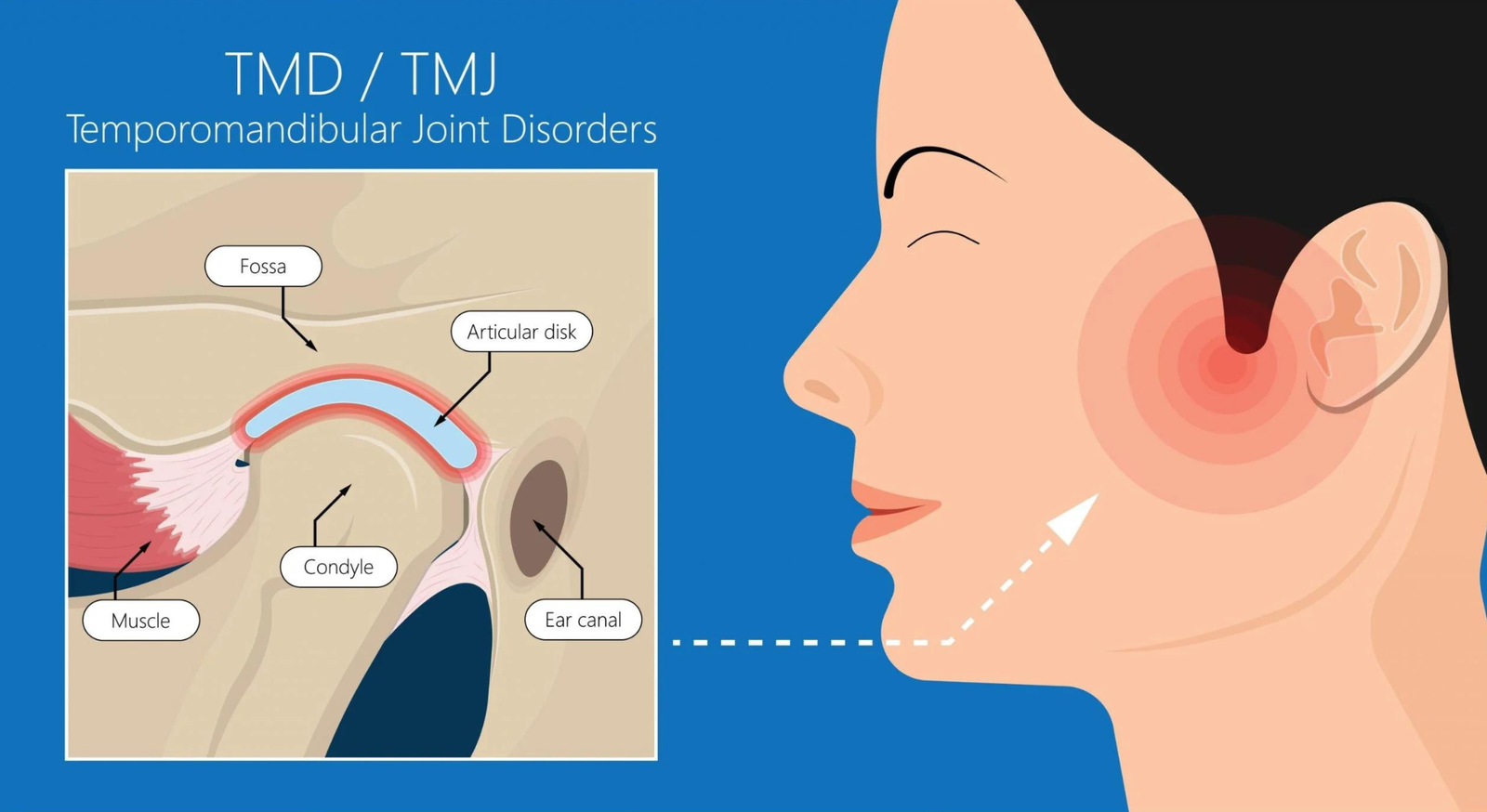
TMJ Disorder can be described as number of clinical problems that involve the muscles of mastication and the temporomandibular joint (TMJ Disorder), and its associated structures.
Signs of TMJ Disorder
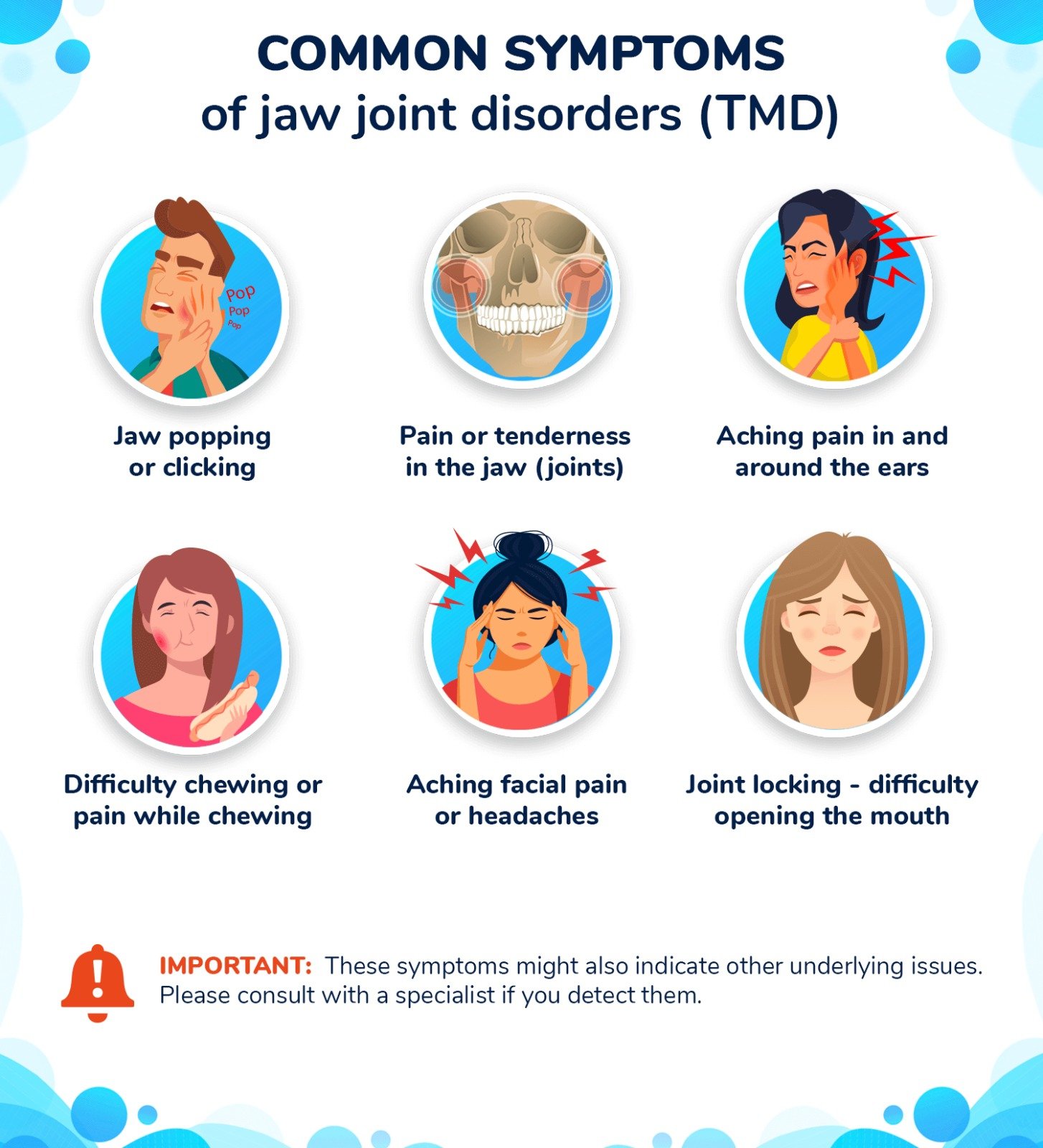
- Deviation or deflection of the lower Jaw while opening or closing the mouth.
- Pain radiating to the ear and head.
- Difficulty in opening the mouth.
- Difficulty in yawning and chewing food.
- Dull gnawing unexplained Pain in the face.
- Tired feeling in the face muscles.
- Clogged Ear feeling / Stuffy Ear feeling.
The majority of problems happening in the TM Joint are on account of the Articular Disc positioned between the bones of the Joint. The position of the Disc and the physical condition of the Articular Disc are the deciding factors for planning an appropriate treatment plan.
However, most of the treatments in the initial stages of TMD are treated using nonsurgical conservative methods, it is important to understand which stage of TMD is the patient in at the moment.
Signs of TMJ Disorder
- Deviation or deflection of the lower Jaw while opening or closing the mouth.
- Pain radiating to the ear and head.
- Difficulty in opening the mouth.
- Difficulty in yawning and chewing food.
- Dull gnawing unexplained Pain in the face.
- Tired feeling in the face muscles.
- Clogged Ear feeling / Stuffy Ear feeling.
The majority of problems happening in the TM Joint are on account of the Articular Disc positioned between the bones of the Joint. The position of the Disc and the physical condition of the Articular Disc are the deciding factors for planning an appropriate treatment plan.
However, most of the treatments in the initial stages of TMD are treated using nonsurgical conservative methods, it is important to understand which stage of TMD is the patient in at the moment.
Surgical Options:
TMJ Arthrocentesis
This is a procedure that bridges the gap between surgical and conservative TMJ treatment options. When all conservative methods of treating TMD are performed and remain unsuccessful for more than 6 months it is required to consider more invasive options depending on the clinical and radiological evidence.
Arthrocentesis is a procedure that involves blind lavage of the joint with two 18 gauze needles in the upper compartment of the joint using Ringer lactate (RL) solution and flushing of the inflammatory mediators present in the joint and can be performed under local anaesthesia, relieving the joint of the negative pressure thereby freeing the disc of any adherence to the bone.
The rationale behind this procedure involves the flushing of these inflammatory mediators that are present in the joint because of disc interferences, mechanical obstruction, occlusal loading of the TMJ, that restrict the movement of the joint and cause pain, once these mediators are flushed from the joint it improves the range of motion and reduces pain significantly
TMJ Arthroscopy
It is the most recent advancement in the field of minimally invasive TMJ surgery. This procedure does not involve any incisions on the face and it can be performed under LA or GA, and is a safe and a precise procedure with minimal downtime for the patient.
Arthroscopy is considered as a superior procedure to arthrocentesis and can be performed in two ways diagnostic arthroscopy or therapeutic arthroscopy.
Therapeutic arthroscopy involves standard procedures that involve inspection, lavage, excision of fibrous bands and various disc repositioning procedures within the joint, a surgeon can also take biopsy of a suspicious structure inside the joint.
Majority of the TMJ issues arise because of an anterior disc displacement in the TMJ, disc repositioning procedure can be performed conveniently using arthroscopy. TMJ Arthroscopy is Divided in levels, i.e. Level 1 Arthroscopy, Level 2 Arthroscopy and Level 3 Arthroscopy.
TMJ Open Joint Surgery
It may be indicated for the following: Tumors, Disc perforations, Fibro or Bony ankylosis, Condylar hypoplasia/hyperplasia and Hypermobility from neurological conditions.
TM Joint Replacement
It is considered for the end stage TMJ disease such as severe trauma, tumour where no components of the TMJ can be salvaged and both the disc as well as the condyle has to be removed. This leaves the patient with a facial asymmetry and malocclusion which then must be treated with a Stock Alloplastic or Patient Specific Custom-Made Joints.
Book an Appointment

Contact Info.
-
Pearl 32 Dental Clinic
Complete Maxillofacial and Dental Care - drsarwpriyasharma@gmail.com
- +91 9926400077